
Always audit-ready,for every regulation
PPWR (Regulation EU 2025/40) applies from 12 August 2026 across all 27 member states. AuditQ collects your supplier evidence, checks every packaging level against the regulation, and generates the compliant documentation, then keeps guiding you through each phase to 2030.
- Suppliers upload evidence directly, so you stop chasing emails
- Every packaging level covered, from primary unit to pallet label
- Tracked against EUR-Lex, so you are ready for each new publication
Book your free PPWR readiness check
Thirty minutes on your packaging portfolio and where your evidence gaps sit.
First question on every call: whose obligation is this?
Under PPWR your duties depend on the role you play for each product, and most businesses play more than one. AuditQ assigns the role per product so the right obligations follow automatically.
Food and beverage producers
You carry the conformity obligation for the packaging you put your product into. That means the technical file, the Declaration of Conformity and the substance evidence behind both.
Wholesalers, importers and exporters
Importing into the EU makes you responsible for verifying that conformity exists. You also carry EPR registration in every market where you first make packaging available.
Private label and retail brands
Selling under your own name makes you the manufacturer in the eyes of the regulation, whoever produced it. The evidence has to come from your co-packers, and it has to hold up.
Four steps from supplier data to compliant document
No consultants, no spreadsheet rebuild. The platform takes you through the same four steps for every product you sell.
Collect the evidence
Suppliers upload specifications, declarations and test reports directly into your supplier platform. Requests and reminders are automatic, and nothing lives in an inbox.
Run the compliance check
Each document is read against the applicable articles: PFAS and heavy-metal thresholds, recyclability, labelling and reuse. Anything missing or out of limit is flagged with the reference behind it.
Build
the product
The product builder assembles every packaging level of your product, from the primary unit through the case to the pallet label, so no component falls outside the assessment.
Generate the document
Your Declaration of Conformity and technical file are produced from the evidence held, versioned and ready to hand to a customer or an authority.
Four obligations that decide market access
Packaging that does not meet the applicable requirements cannot be placed on the EU market. These are the workstreams that have to be closed first.
PFAS in food-contact packaging, and heavy metals across the board
Food-contact packaging cannot be placed on the market at or above the PFAS limits in Article 5(5), and the combined lead, cadmium, mercury and hexavalent chromium limit applies to all packaging types. This becomes an evidence question: supplier test data has to be requested, verified against each threshold and retained.
Every packaging type needs a defensible technical file
An EU Declaration of Conformity supported by technical documentation is required for each packaging type placed on the market. Documentation that still references Directive 94/62/EC needs to be updated to Regulation (EU) 2025/40.
Registration in every market you sell into
Producers must register in each member state where packaging is first made available, and appoint an authorised representative where they are not established locally. Packaging must identify the manufacturer and, where applicable, the importer.
Reusable packaging needs a system behind the claim
Anyone placing reusable packaging on the market must operate a functioning system for collection, reconditioning and redistribution, with consumer instructions and the logistics to return packaging to the loop.
Three dates that define the roadmap
AuditQ tracks PPWR against EUR-Lex, so every implementing act and delegated act is in the platform as it is published. You see what each new publication means for your products, and what to do before the next date lands.
12 August 2026
PPWR applies. Substance restrictions, conformity documentation, operator identification, EPR registration and reuse-system obligations all become enforceable.
2028
Harmonised labelling applies, replacing divergent national marking rules with a single EU pictogram set and digital data-carrier approach.
1 January 2030
Design for recyclability and recycled-content minimums apply. Packaging must meet the required recyclability grade to stay on the market, which means redesign decisions start now.
Know which SKUs put market access at risk
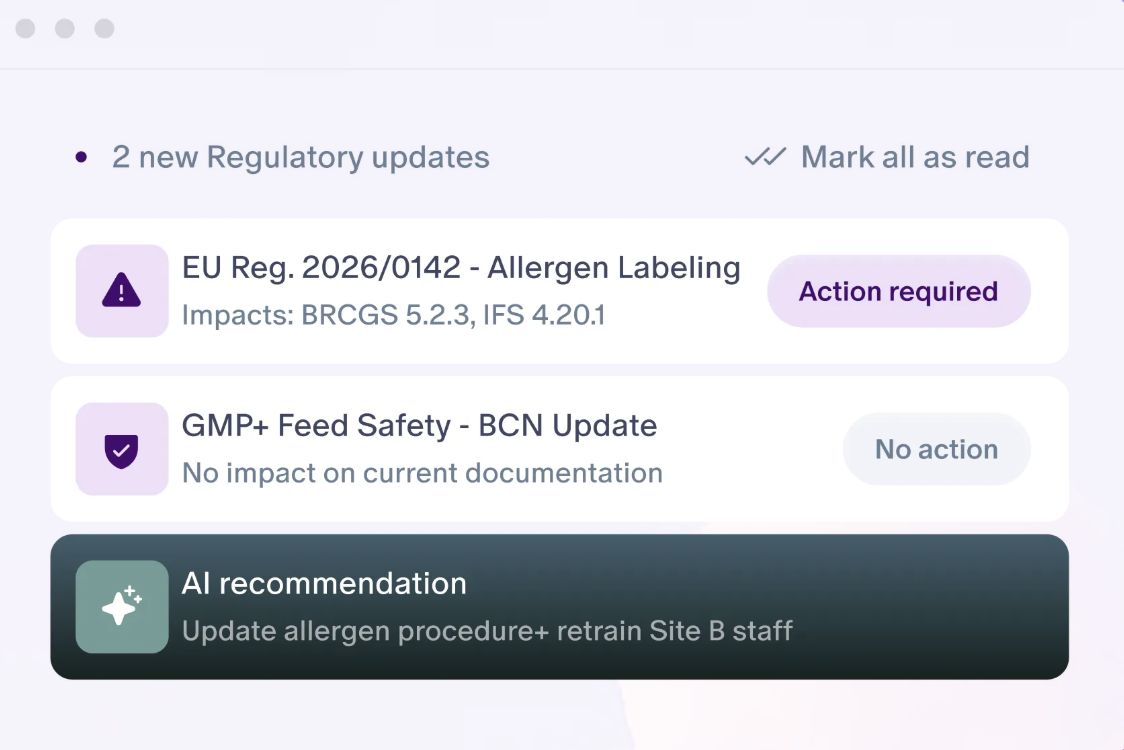
AuditQ maps every packaging type in your portfolio against the applicable PPWR articles and ranks exposure by market and volume. Instead of a regulation to read, you get a prioritised list of the SKUs, materials and suppliers that need attention first.
Do not run after evidence in your inbox
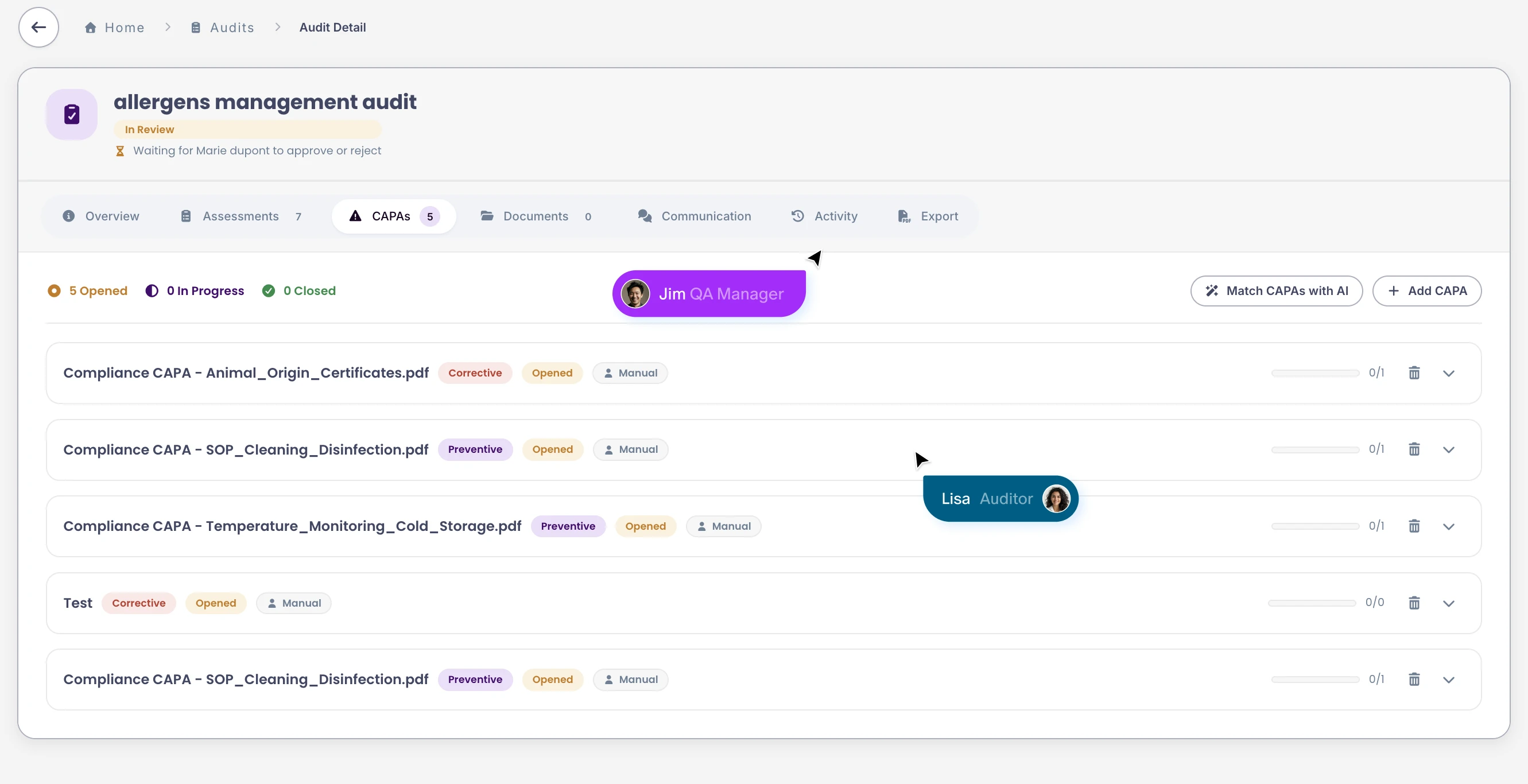
Every supplier gets their own access to AuditQ and uploads specifications, declarations and test reports straight into your file. You see who has responded, what is still open and what does not meet the limit, without opening a single email thread.
- Suppliers upload directly, with automatic reminders
- One live view of who has responded and what is missing
- Documents versioned and reused across every product
Report readiness to the board, not to a spreadsheet
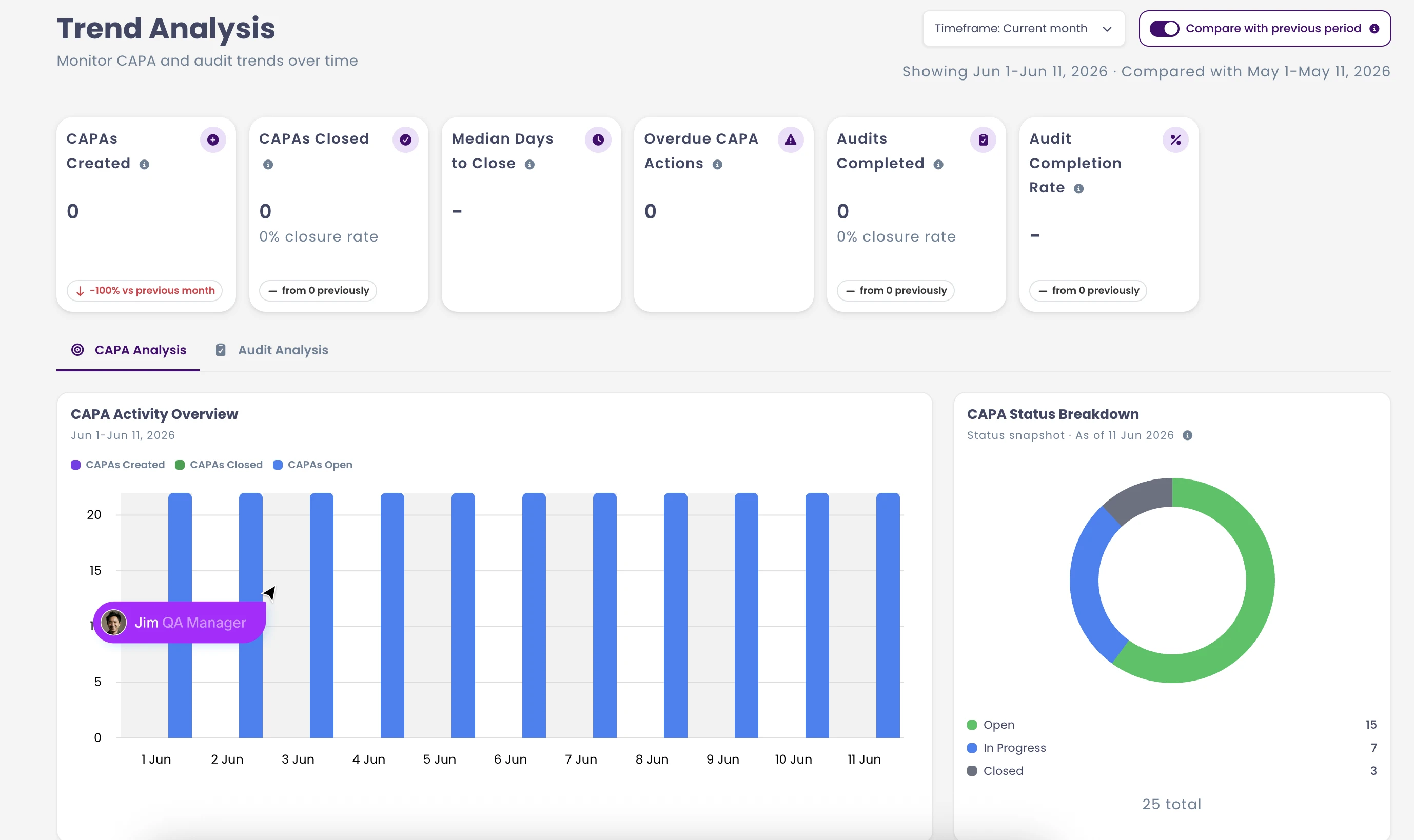
One live view of conformity status by packaging type, market and site. Track secondary legislation and national implementation acts as they land, and show leadership exactly where the remaining exposure sits ahead of each phase.
Already certified? PPWR belongs in the same system.
If you already run BRCGS, IFS, FSSC 22000 or SQF in AuditQ, packaging evidence lives alongside it rather than in a separate tool. Supplier records, specifications and document control are shared once across food safety and packaging compliance, so a second regime does not mean a second programme.
One regulation. Twenty-seven markets. One evidence base.
See AuditQ working on your own packaging portfolio in a free 30-minute readiness check.
Book a free readiness checkWhat senior teams ask us about PPWR
What changes for our business on 12 August 2026?
Regulation (EU) 2025/40 replaces the Packaging and Packaging Waste Directive and applies directly in all 27 member states without national transposition. From that date packaging that does not meet the applicable sustainability, substance, labelling and conformity requirements cannot be placed on the EU market, which makes this a market-access matter rather than a reporting exercise.
How does PPWR differ from the Directive we complied with before?
The previous Directive required national transposition, so obligations differed market by market. PPWR is a regulation and applies identically across the EU on the same day. Organisations that have historically managed packaging compliance country by country need to consolidate to a single evidence base rather than maintaining parallel national interpretations.
What evidence do we need to hold, and who is accountable for it?
Each packaging type placed on the market requires an EU Declaration of Conformity supported by technical documentation. In practice this shifts the burden onto supplier evidence: substance test data, material composition and specification records must be collected, verified and retained. Accountability sits with the manufacturer or importer, not the supplier who provided the material.
How should we sequence the obligations that come after 2026?
Treat the phased dates as a programme rather than a series of deadlines. Harmonised labelling from 2028 and recyclability grades and recycled content from 2030 require design and supplier decisions taken years earlier, so packaging redesign cycles should be planned against the enforcement date rather than the announcement date.